
How many restrooms does a county fair need?
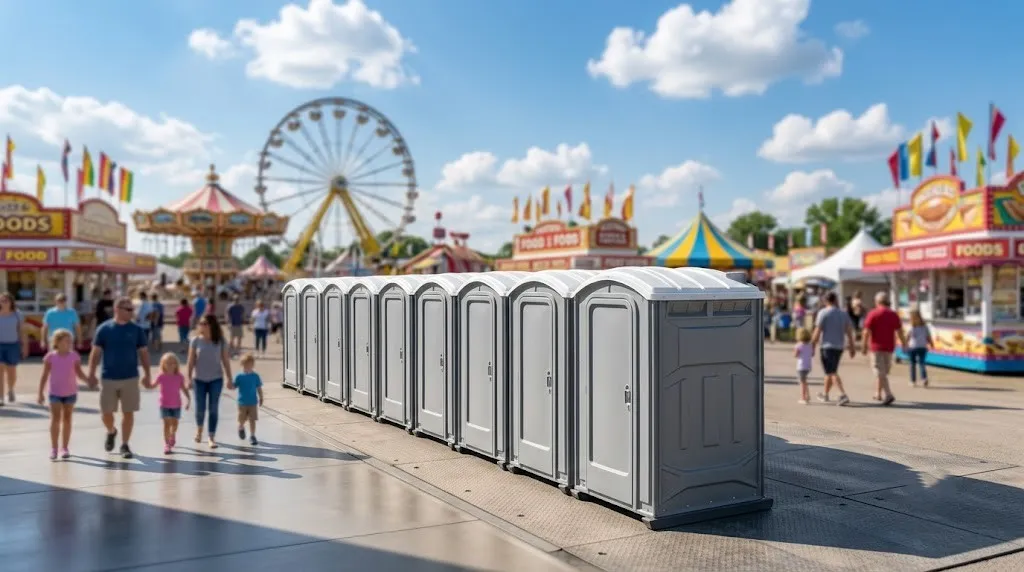
Start with attendance, not gut feeling. OSHA 1926.51(c) sets construction ratios at one toilet per 20 workers, and while a fair isn't a job site, event planners in New Haven use the same logic: figure occupancy, then divide by realistic use intervals rather than guessing. Most fairground layouts land on one unit per 75 to 100 attendees for a single-day event, more if beer or food trucks push people toward restrooms in waves. ANSI/PSAI Z4.3 sets a baseline service interval of once per week for 10 users across a 40 hour week, but a fair concentrates far more traffic into far fewer hours, so units get serviced more than once during multi-day runs. New Haven Porta Pros walks the fairground map before quoting, checking where midway lines will form and where the beer garden sits, because clustering restrooms near high-traffic zones cuts walk time more than adding units at the edges does. For fairs expecting families, standard porta potty rental covers general traffic while deluxe flushable units work well near VIP or sponsor tents. ADA Standards section 213.2 requires that where single-user units are clustered, at least 5 percent be accessible, never fewer than one, so a cluster of eight needs an accessible unit worked into the layout, not bolted on as an afterthought. Fair organizers who've run numbers for how many porta potties they need tend to over-order slightly for weekend fairs, since Saturday crowds usually double Friday's.
What restroom setup works best for a multi-day fair?
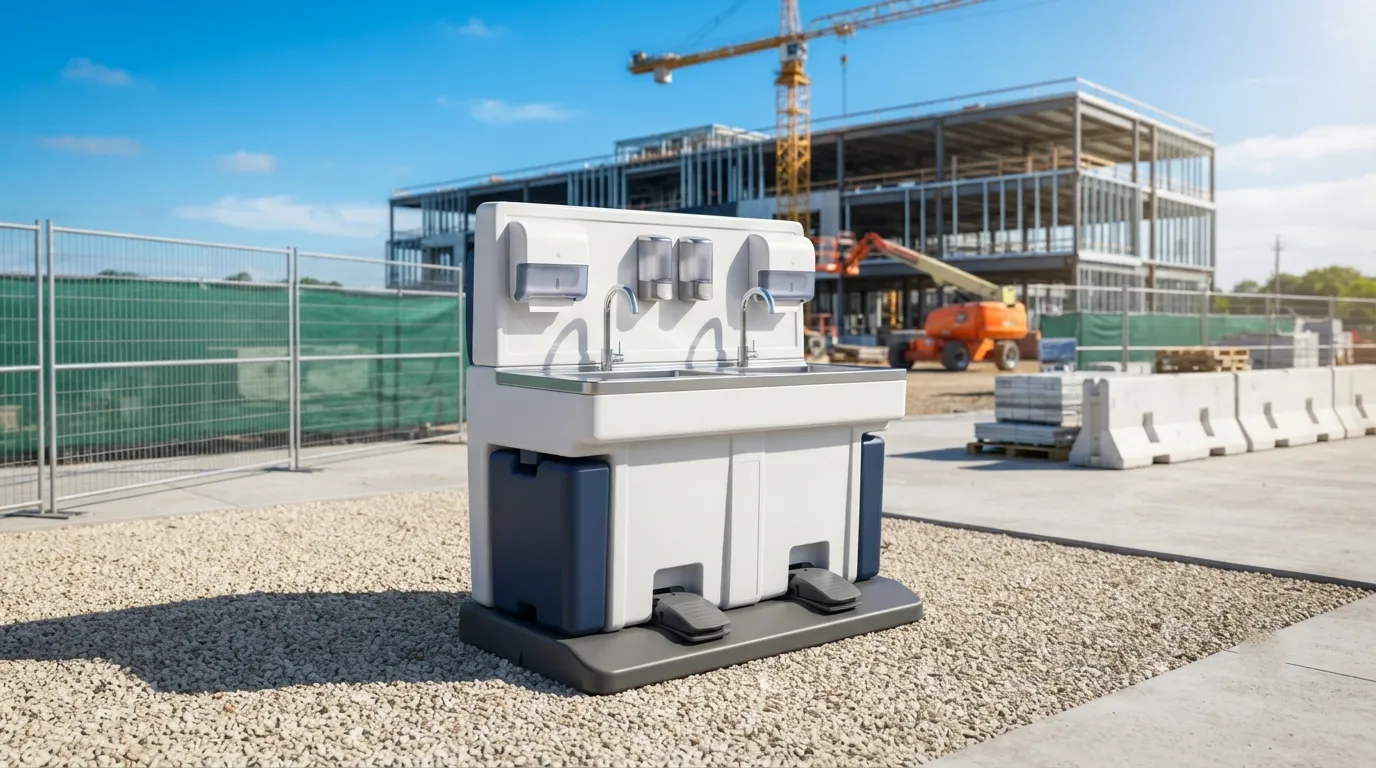
Multi-day fairs need a mix, not a single unit type stamped across the grounds. A standard unit runs 44 by 48 inches on the ground and stands about 92 inches tall, small enough to place in tight rows behind vendor alleys without eating into walkway width. For fairs with grandstand seating or a beer tent, restroom trailer rental gives higher-traffic zones flushing fixtures and running water, which matters when a fair runs Thursday through Sunday and servicing frequency has to stretch across four days instead of one. A 4 stall restroom trailer handles a mid-size crowd near the main stage, while an 8 stall restroom trailer suits fairs with sustained multi-thousand attendance. Handwashing matters too: 29 CFR 1910.141(d)(2) requires soap and towels or a hand dryer at washing stations, and hand sanitizer alone doesn't meet that. New Haven Porta Pros pairs handwashing station rental with food vendor rows, since fairgrounds with fry stations and funnel cake booths draw sticky-handed crowds fast. If the fair includes any painting demos, pesticide displays for agricultural exhibits, or coating booths, OSHA 1926.51(f)(1) requires washing facilities specifically for workers handling those paints, coatings, herbicides or insecticides. Grounds with animal exhibits or petting zoos should also look at farm and agricultural restrooms guidance, since livestock areas draw different traffic patterns than midway games. Delivery trucks need about 60 feet of straight clearance behind them to drop trailers and roll-off units, so fairground access roads and gate widths matter during route planning, especially on grounds built for foot traffic rather than trucks.
Are portable restrooms required at outdoor fairs in New Haven?
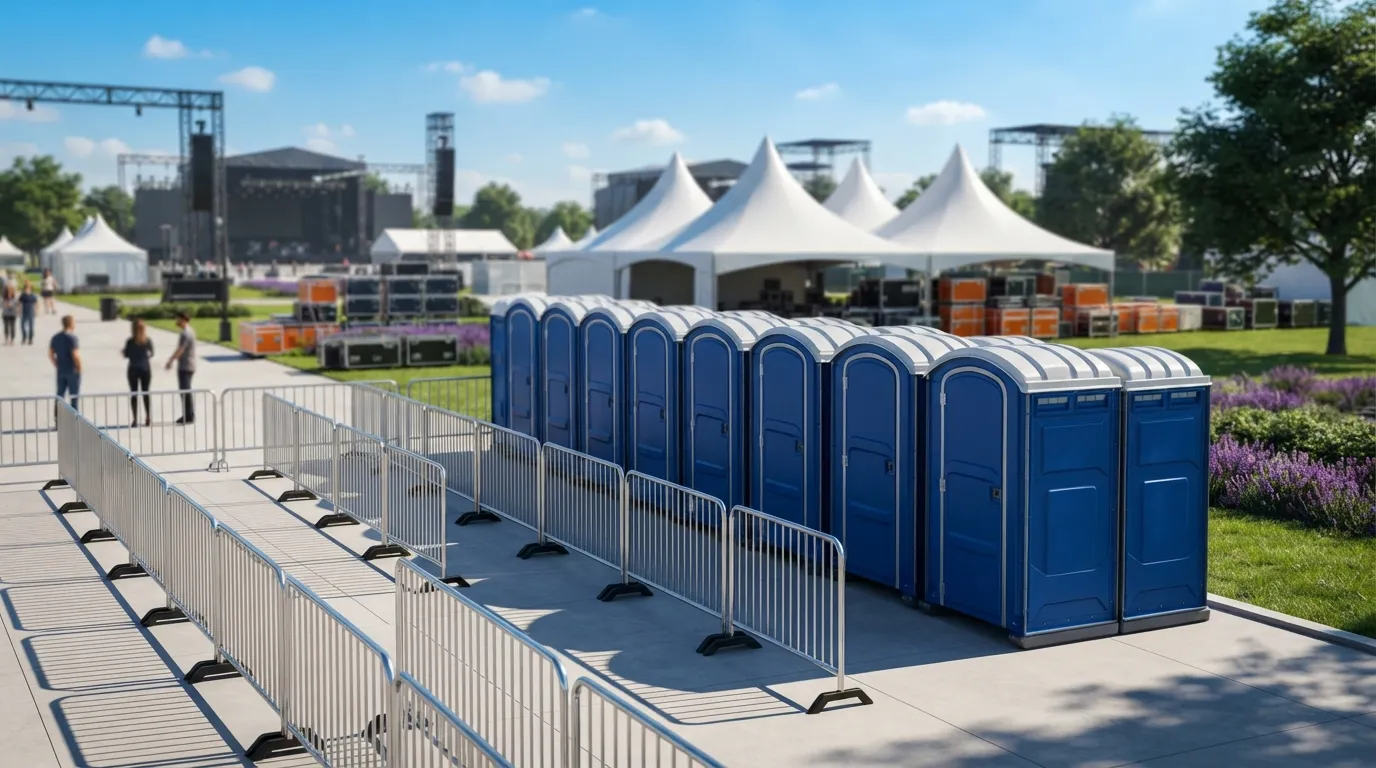
Requirements vary by permit and venue rather than a single blanket rule, and confirming placement in any public right of way still needs a call to the city. New Haven Porta Pros checks porta potty permit requirements before finalizing a fair layout, since fairground sites near West Haven, roughly 4.3 miles southwest, and Hamden, about 7.0 miles north, often draw overflow crowds from both towns and organizers sometimes need sign-off from more than one department. A fair site inside New Haven proper still needs its own placement plan, covering ADA route width under ADA Standards section 403.5.1, which sets a 36 inch minimum clear path, and stable, slip resistant ground per ADA Standards section 302.1 for units sitting on grass or gravel. Fair organizers pulling crowds from Milford city, about 10.4 miles southwest, or as far as Meriden, 18.5 miles northeast, should plan restroom counts around peak Saturday attendance rather than average daily numbers. For grounds without a fixed answer yet, our porta potty placement guide walks through spacing, and the service areas page covers delivery reach across the region.
How far in advance should I book restrooms for a county fair?
Book 4 to 6 weeks out for a fair-sized order. Multi-day fairs need trailers and multiple standard units reserved before smaller weekend events grab the same inventory. Request a quote early through request a quote so New Haven Porta Pros can lock delivery slots.
What does restroom rental cost for a county fair?
Standard units for event use run in the 200 to 800 dollar range depending on duration and count, per our porta potty rental cost breakdown. Trailers cost more but serve higher volume. Get a fair-specific quote through restroom trailer rental cost.
Do fairgrounds need ADA accessible units?
Yes. ADA Standards section 213.2 requires at least 5 percent of clustered single-user units be accessible, never fewer than one. See ADA restroom requirements for full spacing and clearance details for fairground layouts.
How often are restrooms serviced during a multi-day fair?
Service frequency scales with attendance, well beyond the once-weekly baseline in ANSI/PSAI Z4.3. High-traffic fairs typically need daily servicing. Check how often are porta potties cleaned for schedule details tied to attendance volume.
Can we add handwashing stations near food vendors?
Yes, and it's recommended. Food booths draw heavy hand traffic, and 29 CFR 1910.141(d)(2) requires soap and a drying method, not sanitizer alone. See handwashing station rental for placement near vendor rows.
Next step
Get a delivery date
Tell us the address, the dates and the headcount. We size the order and confirm the route.