
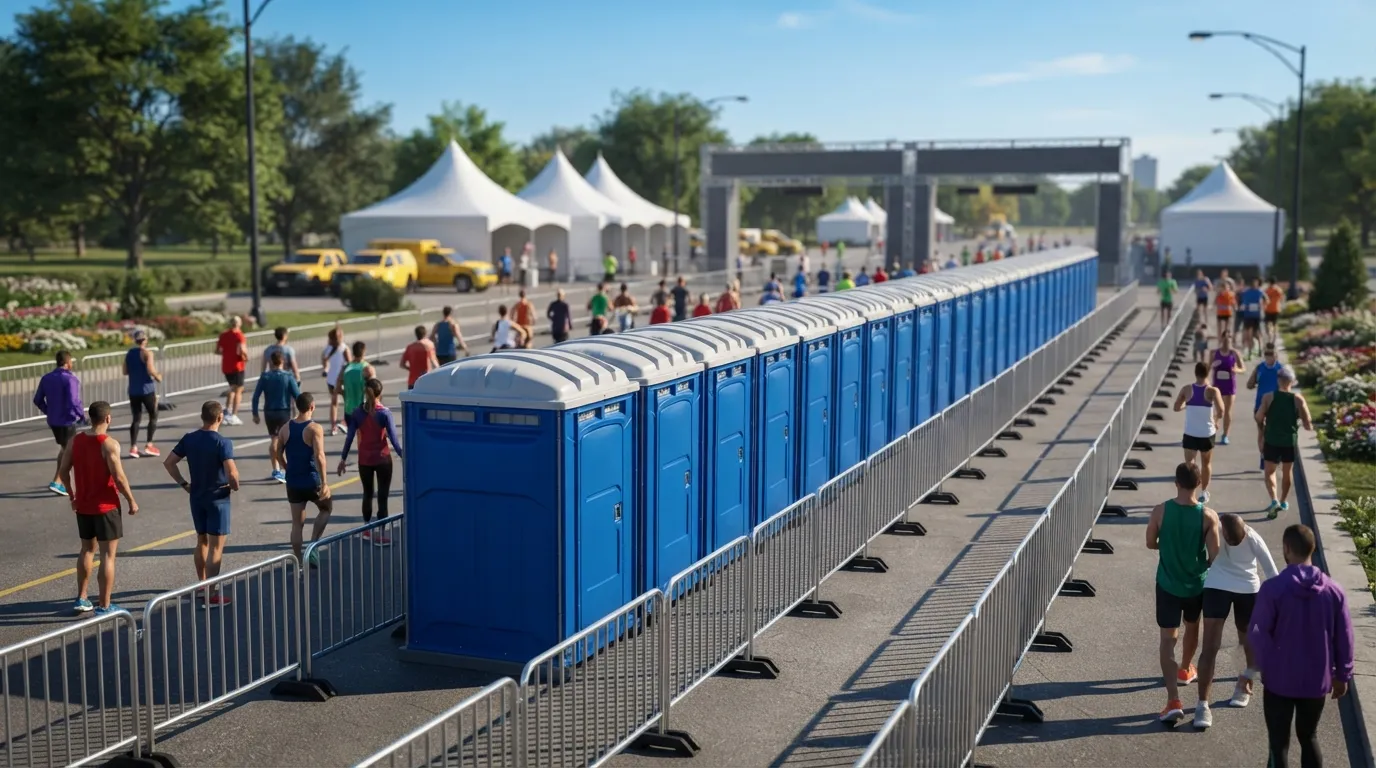
How many restrooms does a race route need?
Start with the field size, then break it into aid stations and corrals rather than one big bank of units. A 5,000-runner race spread across a start line, two aid stations, and a finish festival needs restrooms staged at each point, not just at the start. New Haven Porta Pros typically works from OSHA's construction ratio as a floor, even though races aren't construction sites: OSHA 1926.51(c) calls for 1 toilet per 20 workers up to 20, then scaling by 40s and 50s as headcount grows. Race organizers usually run tighter than that because runners hit restrooms in bursts before the gun, not steadily through the day. A standard porta potty with its 60 to 70 gallon holding tank handles a moderate crowd fine, but stack two or three at the start corral and thin them out along the course. For a finish-line festival with beer tents and food trucks, treat it like the festival restroom rental numbers, not the race-day minimum. Courses that loop back through downtown New Haven can also reuse units at a shared aid station instead of duplicating them, which cuts delivery cost. If your race includes a wheelchair division or handcycle wave, ADA accessible units need a 60 inch turning circle per ADA Standards 304.3.1 and a clear route at least 36 inches wide under ADA Standards 403.5.1. Use the placement guide to keep units off the actual running lane and clear of timing mats.
Where should units go along the course?
Curbside near aid stations works, but you need level, stable ground; ADA Standards 302.1 calls for surfaces that are firm and slip resistant, which rules out soft turf after rain. Coordinate with the city on any unit placed in the public right of way. Placement in New Haven's right of way needs confirming with the city before race day, since permit rules vary by street and route. If your race also needs light towers at a pre-dawn start or a temporary power pole for timing equipment and PA systems, brace the pole properly: guy it at multiple points, set the base plate on solid, level ground, and keep the cabling out of the runner lane and clear of restroom queues. A pole that shifts under wind load near a crowded corral is a hazard nobody wants on race morning. If you're wondering how to brace a temporary power pole, the short version is: guy wires at multiple heights, a level and solid base plate, and cabling routed clear of foot traffic. Units serving the start festival should sit within a short walk of registration and gear check, since that's where lines back up worst. For races finishing at a park or stadium lot, a restroom trailer gives VIP or sponsor tents a nicer option than standard units, and a 2 stall trailer fits tight urban lots better than a larger one. Races drawing runners from West Haven, 4.3 miles southwest, or Hamden, 7.0 miles north, often stage satellite parking with its own restroom cluster to spread out arrival traffic. Keep delivery access in mind too: standard units and trailers both need clear truck access, so avoid blocking the only route in with barricades until after setup.
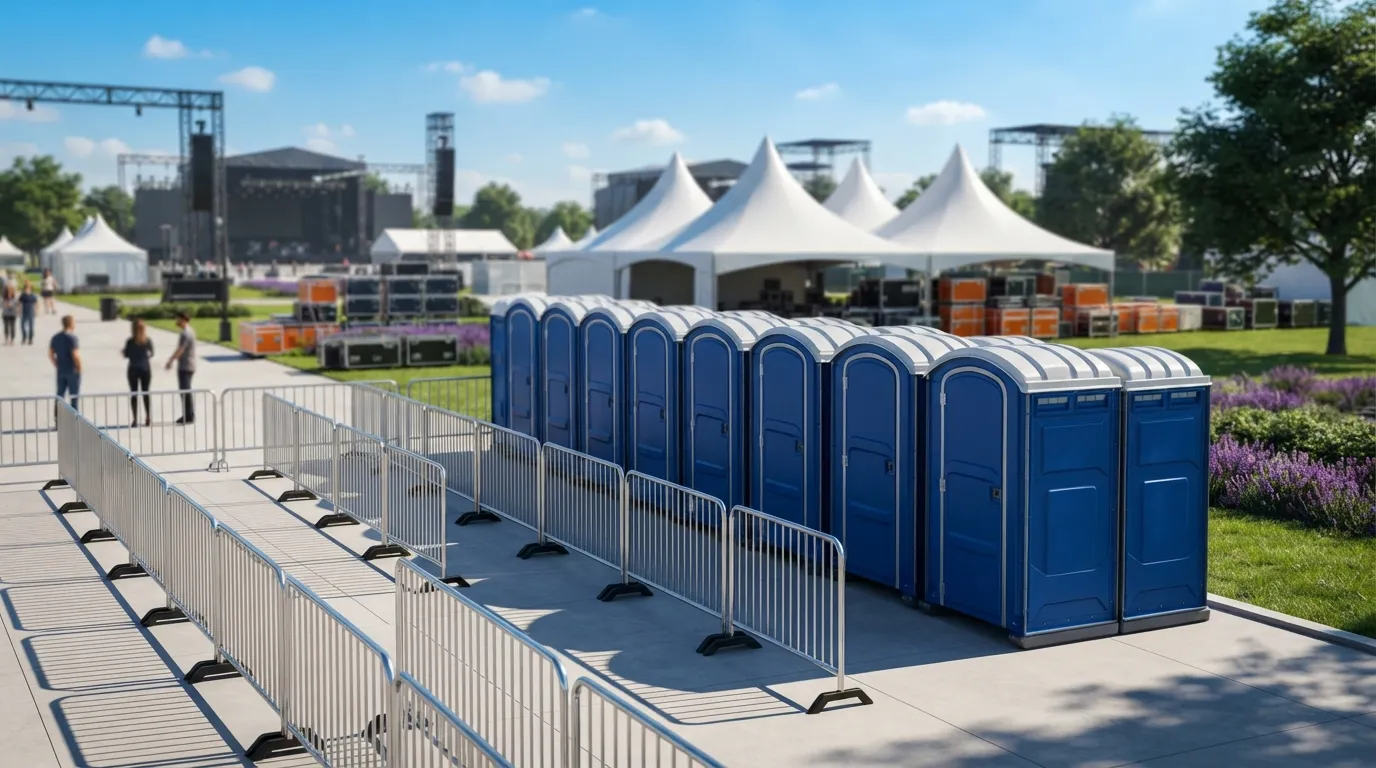
What does race-day restroom rental cost?
Race weekends usually book as a weekend rate rather than a daily one, since setup happens Friday and teardown Monday. Multi-day festival races sometimes make more sense as a week rental instead.
| unit | day | week |
|---|---|---|
| standard | $100 - $350 | $130 - $500 |
| ada | $200 - $400 | $240 - $400 |
| deluxe | $85 - $1,200 | $150 - $290 |
A standard unit's footprint is about 44 by 48 inches on the ground and 92 inches tall, so tight sidewalk placements near a finish chute still need to account for that clearance. Expect a delivery fee on top of the unit rate; those run $100 to $500 for a single day depending on distance and access. If your route needs handwashing beyond what's on the units themselves, a handwashing station rental satisfies 29 CFR 1910.141(d)(2), which requires soap and towels or a hand-drying device, not just sanitizer. Check the full porta potty rental cost breakdown or the per day pricing page if your race runs a single afternoon instead of a full weekend.
How far in advance should I book race restrooms?
Book as soon as your route and headcount are set, ideally weeks out, since weekend trailer and ADA unit availability in New Haven tightens around spring and fall race season. Use the quote request to lock dates early.
Do I need ADA units even for a small local race?
Yes, if units are clustered anywhere on the course. ADA Standards 213.2 requires at least 5 percent of a cluster be accessible, with a minimum of one unit, regardless of total field size.
Can I get restrooms for both the start and finish?
Yes. Most races split units between a start corral, one or two aid stations, and a finish festival area. See the marathon and race restrooms planning notes or the how many porta potties guide for ratios.
What if my race route changes at the last minute?
Call New Haven Porta Pros directly; units can often be repositioned before final delivery. Emergency moves are easier before setup than after, so confirm the route early through contact.
Does a race need handwashing stations beyond the toilets?
It helps, especially near food vendors or medical tents. A portable sink rental or standalone hand sanitizer station covers gaps between restroom clusters.
Next step
Get a delivery date
Tell us the address, the dates and the headcount. We size the order and confirm the route.